


The skull emoji meaning goes beyond a simple digital icon. Representing death, danger, or even dark humor, this emoji is part of a broader set of expressive symbols used in messaging apps, social media, and online conversations. Closely related entities include the 💀 skeleton emoji, ghost emoji, and other macabre or humorous icons, which together help convey tone, emotion, and context in digital communication. Understanding these nuances allows users to send messages that are both precise and culturally aware.
Ever wondered why someone sends a skull emoji after a joke or a shocking story? It often pops up in relatable moments, like reacting to a cringe-worthy text, a hilarious meme, or an unexpected surprise, connecting people through shared emotion in everyday digital interactions.
Bridging the gap between virtual expression and real-life sentiment, the skull emoji serves multiple purposes: highlighting humor, emphasizing danger, or adding dramatic flair to social posts and chats. Whether in texting, social media captions, or creative content, this tiny icon communicates layers of meaning instantly, proving that even a simple emoji can carry powerful messages.
Skull Emoji Meaning
The skull emoji meaning is more than a visual symbol, it conveys a spectrum of emotions from humor to danger. In digital communication, this emoji has become a versatile tool to express reactions that words alone might not capture.
Originally inspired by cultural representations of death and the human skeleton, the 💀 skull emoji now spans several interpretations across texting, social media, and memes. It’s often associated with dark humor, shock, cringe reactions, or even playful exaggeration. Other related symbols include the ghost emoji, crossbones, and skeleton imagery, all of which reinforce its thematic associations.
Key interpretations at a glance:
- Humor/Exaggeration: “I’m dead” after a funny meme
- Danger/Warning: Highlighting risky or alarming content
- Cultural Symbolism: Halloween, gothic themes, or pirate motifs
In real-world use, you’ll see the skull emoji in text messages, social posts, and chat reactions, helping users add tone or emotion instantly. Its adaptability reflects how digital symbols bridge traditional meanings with modern communication trends.
Ultimately, the skull emoji shows how a small icon can carry multiple layers of meaning, combining emotion, context, and cultural nuance in a single, sharable character.
Background & History
The skull emoji meaning is rooted in centuries of cultural symbolism. Skulls have long represented mortality, danger, and rebirth across societies—from ancient art and memento mori motifs to pirate flags and Day of the Dead celebrations. In digital culture, these historical associations informed the creation of the 💀 emoji, giving it both a visual and conceptual resonance.
When first added to Unicode in 2010, the skull emoji was intended to represent death, danger, or spooky imagery in text-based communication. Its design drew from skeleton imagery, comic horror, and gothic iconography, bridging historical symbolism with modern messaging. Over time, it gained new interpretations influenced by internet memes, social media culture, and digital humor.
Historical Context Overview:
| Era | Skull Symbol Meaning | Cultural Influence |
| Ancient | Mortality, ritual | Art, relics |
| 17th–18th Century | Memento mori | European paintings |
| Pirate Era | Danger, warning | Flags, storytelling |
| Modern Digital | Humor, reaction, shock | Emojis, memes |
Today, the skull emoji connects past symbolism with modern digital expression, offering users a familiar yet flexible way to convey emotion, humor, or serious warnings in online conversations.
Initial Signification Of The Skull Emoji
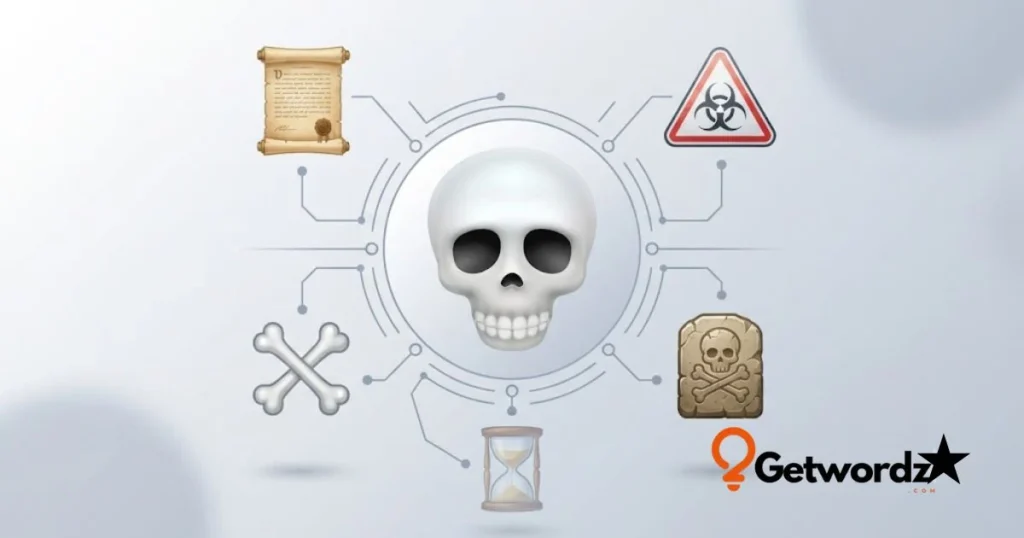
The initial signification of the skull emoji focused on death, danger, and spooky aesthetics. Early users saw it as a digital extension of skeleton imagery, Halloween icons, and comic horror tropes. Its role was largely literal, signaling serious or cautionary topics in chats and posts.
In early social messaging, this emoji often appeared in contexts like:
- Warning about hazardous content
- References to death or injury in stories or memes
- Celebration of gothic or macabre culture
Core Functions:
- Literal representation – Skeletons, danger signs, or death references
- Emotional emphasis – Highlighting shock, surprise, or fear
- Cultural nods – Gothic, Halloween, or pirate-related humor
For example, users might text a 💀 emoji to highlight a scary scene in a game or to accompany a dark joke on social media. In its earliest phase, the emoji maintained a direct, easily interpretable meaning rooted in historical symbolism.
Even now, understanding its initial signification helps users interpret more nuanced, modern uses without losing sight of the emoji’s foundational meaning.
How The Skull Emoji Meaning Changed On Social Media
Over time, the skull emoji meaning evolved dramatically on social media platforms. Once literal, it now serves humor, relatability, and hyperbolic expression far more than its original connotations of death or danger.
Memes and trending content transformed the emoji into a symbol for “I’m dead” in reaction to something extremely funny or shocking. Platforms like Twitter, Instagram, and TikTok popularized this ironic and exaggerated usage. It also gained connections with cringe culture, sarcasm, and digital storytelling, reflecting a shift from literal to expressive meaning.
Social Media Usage Examples:
- 😂💀 – Reaction to hilarious content
- Unexpected twists – Expressing shock or disbelief
- Edgy humor – Dark jokes or ironic commentary
Users now deploy the 💀 emoji creatively in captions, comments, and replies to amplify emotion and engagement. This evolution demonstrates how digital culture can reshape historical symbols, allowing a small icon to carry multiple interpretations simultaneously.
Skull Emoji Meaning Facts Table
The skull emoji meaning can be summarized with clear facts that highlight its versatility across digital contexts.
| Aspect | Details | Example Use |
| Primary Meaning | Death, danger, spooky | “Beware the haunted house 💀” |
| Modern Meaning | Humor, shock, exaggeration | “That joke had me 💀” |
| Related Symbols | Ghost emoji, skeleton emoji, crossbones | Paired in memes or posts |
| Platforms | iOS, Android, Twitter, Instagram | Used in texting and social media |
| Tone | Dark humor, irony, warning | Memes, captions, casual messages |
This table helps users quickly grasp the multi-layered interpretations of the emoji and how it can be adapted for different contexts, from serious warnings to playful expressions.
Skull Emoji Meaning In Text Messages
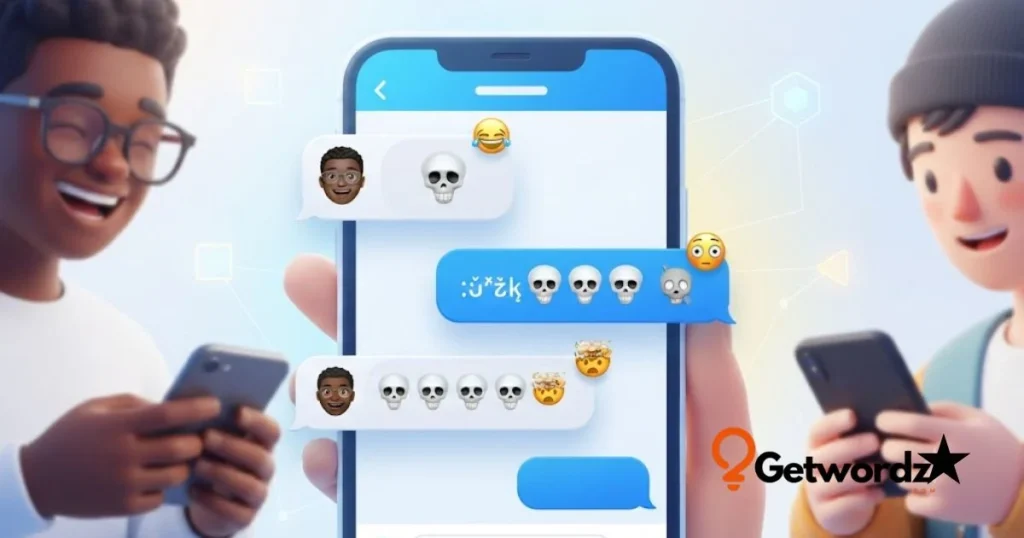
In text messaging, the skull emoji meaning is highly context-dependent. Its literal origins are less common here, with a focus on reactionary expression.
Common uses include:
- Humor: Responding to a funny story or joke
- Exaggeration: Emphasizing being “dead” from shock or embarrassment
- Warning: Indicating risky or dangerous situations
Tips for Texting Use:
- Combine with other emojis for clarity (😂💀)
- Use in informal chats rather than professional messages
- Leverage timing and context to avoid misinterpretation
By using it strategically, the emoji adds tone, emotion, and personality to text conversations. Proper understanding ensures your messages convey the intended reaction without confusion.
Skull Emoji Meaning By Context
The meaning of the skull emoji shifts depending on context. Its flexibility allows it to fit casual conversations, dark humor, and serious topics.
Casual Conversations
In casual chats, the 💀 emoji often signals laughing until you’re “dead”, mild embarrassment, or surprise. Users send it after:
- Funny memes or TikToks
- Cringe-worthy situations
- Relatable everyday moments
Example: “I tripped in front of everyone 💀” – lighthearted self-deprecation
Dark Humor
Within dark humor, the skull emoji emphasizes irony, sarcasm, or edgy jokes. It pairs well with macabre memes, gothic references, or satirical content.
Example: “I stayed up all night wallow-watching horror movies 💀” – playful exaggeration
Serious Topics
In more serious contexts, the emoji retains its original symbolic weight, representing danger, death, or mortality awareness. It is often used carefully alongside:
- Health or safety warnings
- Cautionary social posts
- Awareness campaigns
Example: “Handle chemicals carefully 💀” – direct cautionary use
The skull emoji meaning demonstrates the power of context in digital communication, showing how a single icon can convey humor, irony, or seriousness depending on the situation.
Skull Emoji Meaning On Different Platforms
The skull emoji meaning can vary slightly depending on the platform, as each app or operating system designs its version of the 💀 emoji differently. While the core ideas of death, danger, and humor remain, visual style, user culture, and platform-specific trends influence interpretation. Understanding these differences helps users convey the intended tone accurately across social media and messaging apps.
TikTok
On TikTok, the 💀 emoji is most commonly associated with funny reactions and viral memes. Users pair it with text or other emojis like 😂 to show extreme laughter or being “dead” from shock or embarrassment.
Examples of use:
- Commenting on a hilarious video: “This had me 💀”
- Reacting to relatable cringe content
- Highlighting over-the-top trends
TikTok’s fast-paced, meme-driven environment pushes the skull emoji toward humorous, exaggerated expression rather than literal meanings.
Twitter or X
On Twitter (X), the skull emoji meaning is versatile, ranging from sarcastic humor to emphasis in dramatic tweets. Users often leverage it to react to shocking news, viral content, or dark jokes.
Common applications:
- Reactions to trending topics: “Can’t believe this happened 💀”
- Emphasizing irony or exaggeration in tweets
- Pairing with other symbols like 🔥, 😂, or 😳
The brevity and public nature of tweets encourage concise, tone-heavy use of the emoji for engagement and relatability.
On Instagram, the 💀 emoji frequently appears in captions, comments, and story reactions. It often signals humor, shock, or relatability, aligning with Instagram’s visually driven, lifestyle-focused platform.
Typical scenarios:
- Meme captions: “Me trying to adult 💀”
- Story reactions to funny or dramatic posts
- Influencer captions emphasizing irony or exaggeration
Instagram users exploit its flexibility to enhance captions and increase engagement in both casual and viral content.
Snapchat
On Snapchat, the skull emoji meaning is generally casual and playful. It complements chat reactions, Snaps, and streak messages to convey amusement, exaggeration, or minor embarrassment.
Usage tips:
- Sending in response to a funny Snap or story
- Lighthearted self-deprecating jokes
- Combining with GIFs or other emojis for emphasis
Snapchat’s ephemeral messaging style allows the skull emoji to convey tone quickly and visually, emphasizing immediacy in reaction.
Skull Emoji Meaning In Message
Across messaging platforms, the skull emoji meaning adapts to context and audience. Its use spans:
- Humor: “That pun killed me 💀”
- Exaggeration/Drama: Reacting to shocking or surprising events
- Warning/Danger: Rarely, in serious contexts like health or safety
Tips for effective messaging:
- Combine with other emojis to clarify tone (😂💀)
- Avoid overuse to prevent misinterpretation
- Consider audience familiarity with emoji trends
In text or chat, the 💀 emoji serves as a versatile, emotional shorthand, conveying humor, irony, or caution with just a single character. Its adaptability ensures it remains relevant in daily digital communication.
Gen Z Skull Emoji Meaning
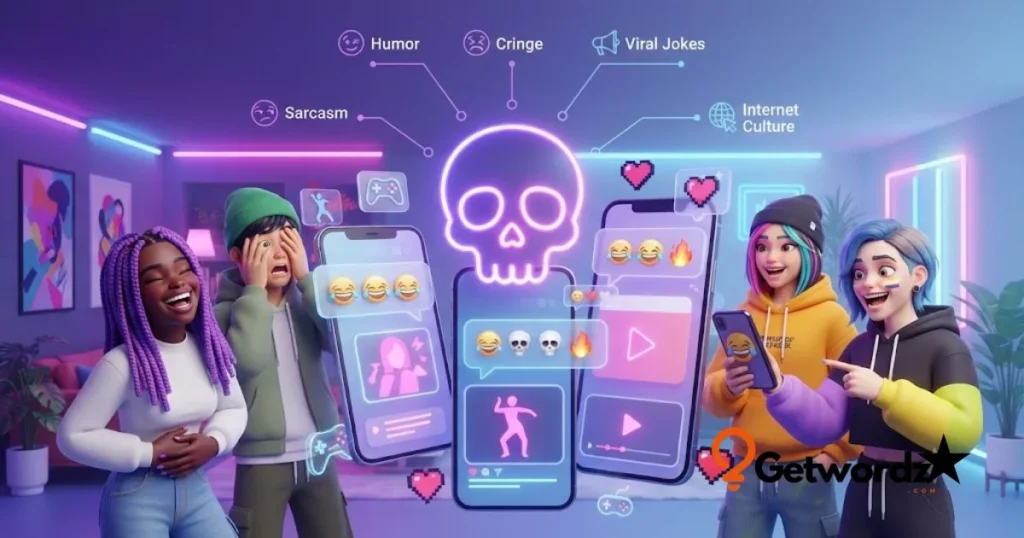
For Gen Z, the skull emoji meaning has shifted from literal death to digital slang expressing extreme laughter or shock. Phrases like “I’m dead” or “literally dead” pair naturally with the 💀 emoji, making it a staple in texting, TikTok captions, and meme culture.
This demographic often uses it to react to jokes, cringe moments, or absurd situations, turning the skull into a hyperbolic response symbol rather than a serious one. It aligns with other internet slang like “😂”, “deadass”, and “lit”.
Key Gen Z Uses:
- Reacting to funny content: “That TikTok had me 💀”
- Expressing second-hand embarrassment or cringe
- Amplifying memes or viral content reactions
Its popularity illustrates how emoji language evolves generationally, reflecting humor, irony, and cultural trends unique to Gen Z communication.
Skull Emoji Meaning From a Girl
When sent by a girl, the skull emoji meaning can vary based on context, tone, and social dynamics. It’s often used to express:
- Laughing until “dead” at a funny or embarrassing moment
- Exaggerated shock or disbelief
- Playful sarcasm or teasing
Example scenarios:
- Reacting to a silly text: “You actually did that? 💀”
- Responding to a meme in a group chat
- Emphasizing dramatic flair in casual banter
In general, girls use the emoji as a lighthearted, expressive tool to convey humor or reaction, rather than its original macabre connotations. Understanding subtle social cues ensures the emoji’s intended tone is read correctly.
Skull Emoji Meaning Urban Dictionary
The skull emoji meaning on Urban Dictionary emphasizes its informal, humorous use online. Definitions highlight:
- “I’m dead” – laughing uncontrollably
- Reaction to cringeworthy or shocking situations
- Emphasis in memes, texts, or posts to exaggerate emotion
Urban Dictionary Context Tips:
- Mostly used in casual texting, TikTok comments, and meme culture
- Often paired with 😂, 😭, or other expressive emojis
- Highlights digital irony and generational slang
This reflects how user-generated definitions shape modern emoji understanding, giving the skull emoji a fluid meaning influenced by pop culture and online trends.
Why People Use The Skull Emoji Instead Of Laughing Emojis
People increasingly choose the skull emoji over traditional laughing emojis to convey more extreme, ironic, or meme-oriented reactions. While 😂 indicates simple laughter, 💀 adds hyperbolic drama, signaling “I’m dead from laughter” or “this is so cringe it kills me.”
Reasons for Preference:
- Exaggeration: Adds intensity to humor
- Irony: Fits memes, sarcasm, or edgy jokes
- Trendiness: Aligns with Gen Z and social media slang
- Creativity: Offers a visual twist that differentiates reactions
Practical Example:
- Funny TikTok comment: “Me watching that fail 💀” instead of just 😂
- Relatable group chat response: “You actually said that? 💀”
Using the skull emoji instead of a standard laughing emoji reflects the evolution of digital humor, blending exaggeration, irony, and cultural awareness in a single symbol.
When Not To Use The Skull Emoji
While the skull emoji meaning is often humorous or dramatic, there are contexts where its use can backfire. Misreading the tone can lead to confusion, offense, or miscommunication.
Situations to Avoid:
- Professional or formal messages: Sending 💀 in work emails or LinkedIn messages may seem inappropriate.
- Serious discussions: Using it in messages about death, illness, or emergencies can appear insensitive.
- Ambiguous audiences: If the recipient doesn’t understand meme culture, the emoji may be misinterpreted.
Tips for Safe Use:
- Assess the audience and context before sending.
- Pair with clarifying words or other emojis for tone.
- Limit use in serious or sensitive conversations.
Using the skull emoji thoughtfully ensures it enhances communication rather than causing misunderstanding or offense.
Skull Emoji Meaning vs Other Emojis
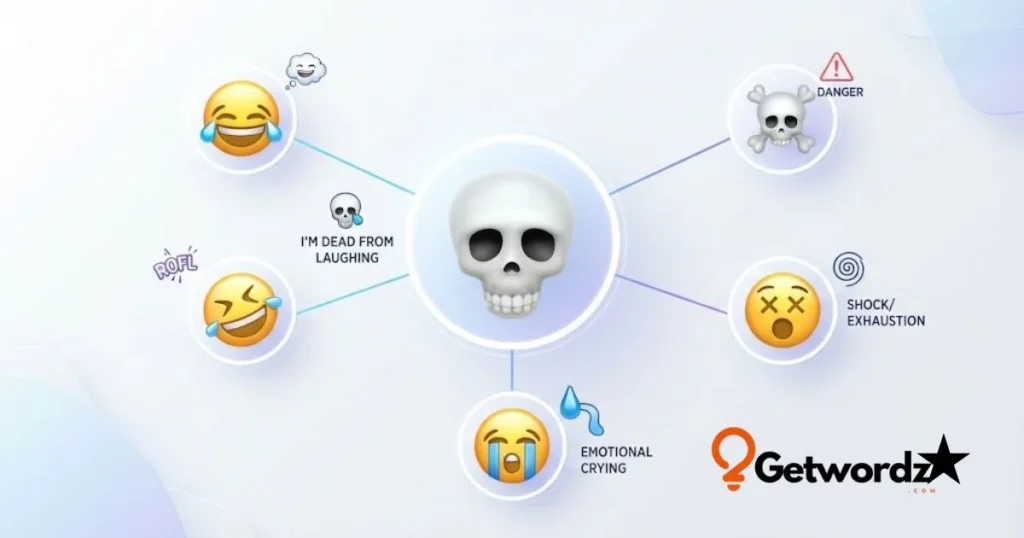
The skull emoji meaning differs from other reaction emojis in its tone, intensity, and cultural nuance.
Comparison Table:
| Emoji | Typical Meaning | Tone | Common Use |
| 💀 Skull | Extreme laughter, dark humor, danger | Hyperbolic, ironic, edgy | Memes, TikTok, casual chats |
| 😂 Face with Tears | Laughing, humor | Light, playful | General humor, texting, social media |
| 😭 Loudly Crying | Sadness, overwhelmed | Emotional, dramatic | Relatable frustration, sadness, exaggeration |
| 😳 Flushed Face | Shock, embarrassment | Mildly surprised | Awkward or cringe moments |
The skull emoji offers more dramatic exaggeration and edgy tone compared to traditional laughing emojis, making it a preferred choice for memes, Gen Z slang, and viral content.
Why The Skull Emoji Meaning Keeps Growing
The skull emoji meaning continues to expand because it blends humor, irony, and cultural relevance. It adapts easily to evolving digital communication trends, especially on TikTok, Instagram, and group chats, where hyperbolic reactions are common.
Reasons for Growth:
- Viral trends: Memes and challenges popularize the emoji.
- Generational slang: Gen Z and younger users favor exaggerated expressions.
- Cultural flexibility: It works in humor, sarcasm, and dark commentary.
- Cross-platform visibility: Appears consistently across apps, keeping it relevant.
As a result, the skull emoji is more than a symbol, it’s a digital shorthand for shared cultural understanding, humor, and relatability in modern messaging.
Pros and Cons
Understanding the pros and cons of the skull emoji helps users maximize its impact while avoiding miscommunication.
Pros:
- Expresses extreme reactions in a compact, visual way
- Enhances humor, sarcasm, and irony
- Trendy and widely understood among younger audiences
- Works across social media platforms and messaging apps
Cons:
- Can be misinterpreted in serious or professional contexts
- May confuse audiences unfamiliar with internet slang
- Overuse can make messages feel dramatic or exaggerated
- Cultural differences may alter perceived meaning
Practical Insight:
Use the 💀 emoji thoughtfully and contextually to convey humor, exaggeration, or shock without alienating or offending the recipient. Its versatility makes it a powerful digital tool, but only when applied appropriately.
FAQs or Search Quries about Skull Emoji Meaning
1. What Does the 🙃 Mean in Texting?
The 🙃 emoji usually shows playfulness, sarcasm, or irony in a message. People use it to signal joking, light teasing, or mild sarcasm.
2. Does 💀 Mean Laughing?
Yes, the 💀 emoji often replaces 😂 to show extreme laughter or “I’m dead” from shock, cringe, or hilarity, especially in memes and social media.
3. What Does Skull Emoji Green Screen Mean?
A skull emoji green screen refers to videos or effects where the 💀 emoji is overlaid digitally, often in TikTok or Instagram edits to enhance humor or reactions.
4. What Is the Dead Skull Emoji Meaning?
The dead skull emoji represents shock, extreme laughter, or dramatic exaggeration, not literal death. It’s common in texts, memes, and social media for ironic effect.
5. What Is the White Skull Emoji Meaning?
The white skull emoji (💀) traditionally symbolizes death, danger, or dark humor, but modern use often reflects funny reactions or dramatic emphasis online.
6. What Is the Black Flag With Skull Emoji Meaning?
A black flag with a skull (☠️) signifies danger, warning, or piracy, and sometimes represents edgy or gothic aesthetics in digital content.
7. What Is the Smiling Skull Emoji Meaning?
The smiling skull emoji conveys a playful, ironic, or slightly dark sense of humor, often used to lighten a macabre or shocking statement.
8. What Does 3 Skull Emoji Meaning?
Using 💀💀💀 triples the effect to emphasize extreme laughter, shock, or dramatic reaction, commonly in memes, group chats, or social posts.
Conclusion
From ancient symbols of mortality to the playful exaggeration of modern memes, the skull emoji meaning reflects how humans express emotion, humor, and shock through simple visuals. Understanding its nuances helps you navigate digital conversations with clarity, whether reacting to a joke, emphasizing drama, or adding flair to social media posts.
By using the 💀 emoji thoughtfully, you can convey tone, connect with others, and participate in evolving internet culture without misunderstanding. Remember, even a small icon can carry layers of meaning, humor, caution, or cultural reference, turning a single character into a bridge between expression and connection.
In every text, comment, or caption, the skull emoji reminds us that communication can be playful, poignant, and instantly understood all at once.